A reliable oven should heat evenly, hold the right temperature, plus cook food without constant adjustments. When meals come out burned on one side or undercooked in the center, the appliance may need attention.
Oven repair helps homeowners fix heating, temperature, sensor, igniter, control, seal, plus electrical issues before the problem gets worse. Timely service can improve cooking results, protect the appliance, plus reduce frustration during daily meal prep.
Why Uneven Oven Heating Matters?
Many homeowners first notice an oven not heating problem when food takes longer than expected or does not cook at all. This issue can come from a weak heating element, faulty igniter, damaged sensor, or control failure.
Uneven heat can also affect food safety. Meat, casseroles, baked goods, plus frozen meals may not cook properly when the oven cannot maintain stable heat.
When the Oven Heats Unevenly?
A clear oven not heating evenly issue often shows up when food burns near the back but stays pale near the front. Hot spots, cold spots, uneven browning, plus inconsistent baking results are common warning signs.
Different causes can create uneven cooking. Poor airflow, a worn element, bad sensor, weak igniter, or damaged door seal may all affect heat distribution.
Temperature Problems
An oven temperature problem can make cooking times unreliable. The display may show one temperature while the actual oven cavity runs much hotter or cooler.
Simple oven thermometers can help confirm whether the temperature is accurate. If the reading stays far from the setting, a technician should inspect the control system.
Oven Fails to Reach the Set Temperature
An oven not reaching temperature may take too long to heat or stop below the selected setting. This can make baking, roasting, plus broiling difficult.
Several parts can cause this issue. The problem may involve the heating element, igniter, thermostat, sensor, wiring, or control board.
Long Preheat Times
An oven takes too long to preheat issue can waste time plus raise energy use. Slow preheating may point to weak heating parts, poor ignition, or a temperature sensor that does not read correctly.
Occasional delay may happen with large ovens or higher settings. Repeated slow preheating usually means the appliance needs inspection.
Heating Element Failure
An oven heating element problem is common in electric models. A damaged element may look blistered, broken, burned, or fail to glow during operation.
Electric ovens often rely on bake plus broil elements for steady heat. If one element fails, food may cook unevenly or not heat at all.
Igniter Problems
An oven igniter problem often affects gas ovens. A weak igniter may glow but fail to open the gas valve properly, which can delay heating or stop the oven from lighting.
Gas ignition issues need safe handling. Homeowners should avoid using the oven if they smell gas or notice delayed ignition.
Thermostat Issues
An oven thermostat problem can cause the appliance to overheat, underheat, or cycle at the wrong time. The thermostat helps control the oven’s internal temperature.
Incorrect temperature control can ruin meals. A technician can test the thermostat to confirm whether it needs adjustment or replacement.
Sensor Problems
An oven sensor problem can create inaccurate temperature readings. The sensor may send the wrong signal to the control board, which affects heating performance.
Sensor issues may cause food to burn or stay undercooked. Professional testing can confirm whether the sensor is faulty or another part is causing the problem.
Control Board Failure
An oven control board issue can affect heating, timing, temperature, display, plus cycle operation. The oven may show error codes, shut off early, or fail to respond correctly.
Control boards should be tested before replacement because other parts can create similar symptoms. A trained technician can diagnose the electrical system safely.
Door Seal Problems
An oven door seal problem allows heat to escape during cooking. This can make the oven work harder, increase preheat times, plus create uneven baking results.
Homeowners can inspect the gasket for gaps, cracks, or loose areas. A damaged seal should be replaced to restore better heat retention.
Oven Heating System Diagnostic Matrix
| Diagnostic Symptom | Primary Suspect Components | Key Technical Indicators | Diagnostic Protocol | Service Recommendation |
|---|---|---|---|---|
| Fails to Reach Setpoint | Bake/Broil Element, RTD Sensor, ECM Relay, Thermostat | Insufficient heat rise rate, premature cycling, error codes | Verify element resistance & continuity; test RTD ohms at room temp (~1080Ω @ 70°F) | Replace failed element or sensor first; retest before ECM replacement |
| Extended Preheat Duration | Weak Heating, Degraded RTD Sensor, Poor Door Seal, Relay | Slow ΔT/min, sensor drift, excessive current draw | Measure preheat ramp time vs. spec; check sensor resistance curve | Clean & reseal door; replace element/RTD if out of calibration range |
| Heating Element Failure | Bake or Broil Resistive Element | Visual blistering, open circuit, no glow, infinite resistance | Disconnect power, test each element for continuity (20-40 Ω typical) | Direct element replacement; inspect wiring harness for burns |
| Igniter Malfunction | Glow-Bar Igniter, Gas Valve Solenoid, Flame Sensor | Dim or delayed glow, no gas ignition, prolonged retry cycle | Test resistance vs. temperature chart; compare against known good probe | Replace igniter proactively – weak units often damage gas valve over time |
| Temperature Sensor Drift | Oven RTD Probe / Thermistor | Erratic or offset readings, over/under temp by 25°F+ | Test resistance vs. temperature chart; compare against known good probe | Calibrate or replace RTD; clear any wiring harness chafing |
| Control Board / ECM Failure | Electronic Control Module (Main PCB) | Intermittent operation, false error codes, relay chatter, no response to inputs | Board-level voltage checks & sensor inputs; use freeze spray for thermal intermittents | Confirm all components before ECM swap; reprogram or replace with OEM match |
Food Burns Too Often
An oven burning food may be overheating or cycling incorrectly. Burned edges, dark bottoms, or scorched meals can point to thermostat, sensor, rack placement, or heating element trouble.
Consistent burning is not normal when recipes, timing, plus temperature settings are correct. A service visit can identify the reason behind the excess heat.
Food Stays Undercooked
An oven undercooking food can happen when the appliance cannot reach or hold the selected temperature. The problem may involve weak heat, poor airflow, or inaccurate temperature readings.
Undercooked food can create safety concerns, especially with meat or poultry. If cooking times keep increasing, the oven should be checked.
Oven Stops Working Completely
An oven stopped working situation may come from power failure, gas supply issues, bad wiring, blown fuses, control failure, or a failed heating part. Basic checks can include the breaker, outlet, settings, plus gas supply when safe.
If the oven still does not respond, internal parts need professional testing. Avoid opening panels or touching wiring without proper training.
Electric Oven Repair
Professional electric oven repair can help when the unit has heating element failure, temperature swings, wiring trouble, or control problems. Electric models depend on steady voltage plus working heat components.
A technician can test the bake element, broil element, sensor, thermostat, wiring, plus control board. Proper diagnosis helps prevent unnecessary part replacement.
Gas Oven Repair
Reliable gas oven repair is important when ignition fails, heat feels weak, or the oven smells unusual. Gas models may have igniter, burner, valve, sensor, thermostat, or control issues.
Safety should come first with gas appliances. If you smell gas, leave the area, avoid switches, then contact the proper emergency service before scheduling appliance repair.
Wall Oven Repair
Skilled wall oven repair can help when a built-in unit has heating, display, door, or temperature problems. Wall ovens often require careful service because they are installed inside cabinets.
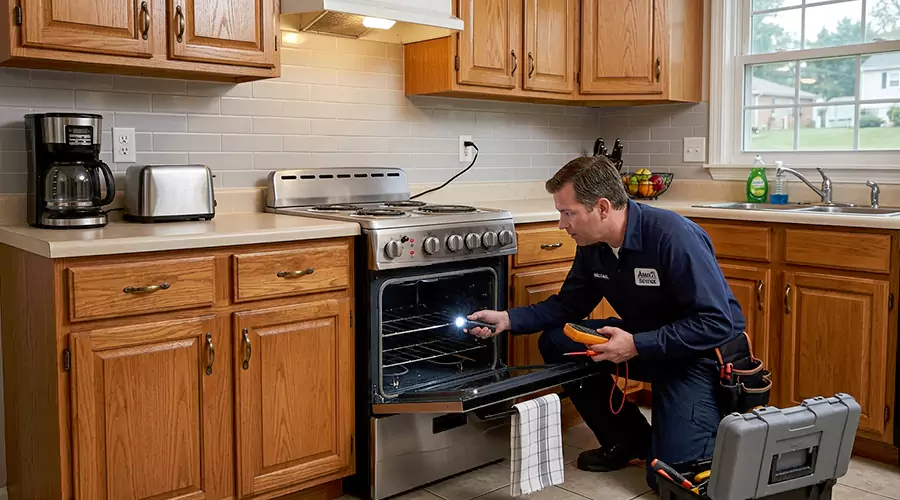
A technician can inspect the unit without damaging surrounding trim or cabinetry. Proper service also checks ventilation, wiring access, door alignment, plus control function.
Why Professional Service Matters?
Trusted oven repair services should include inspection, diagnosis, repair options, pricing details, plus final testing. Clear service helps homeowners understand what failed, why it happened, plus how the repair solves it.
Experienced professional oven repair reduces guesswork when the issue involves electricity, gas, high heat, sensors, or controls. Safe repair helps protect both the appliance plus the home.
Home Oven Support
Convenient home oven repair allows the technician to inspect the appliance where it is installed. This helps them check power supply, gas connection, cabinet fit, ventilation, level position, plus door operation.
Quality residential oven repair supports the needs of everyday households. A properly working oven keeps meals, baking, holidays, plus family routines on schedule.
Technician Diagnosis
An experienced appliance repair technician can test the oven, explain the issue, then recommend the best repair option. This helps homeowners avoid replacing parts without knowing the real cause.
Good technicians also test the oven after repair. Final checks confirm heating accuracy, safe operation, proper ignition, plus steady temperature control.
Troubleshooting Before Service
Safe oven troubleshooting can help rule out simple issues. Check the following options carefully:
- Breaker box and power supply status
- Temperature and baking mode settings
- Oven rack arrangement and spacing
- Door alignment and tight closure
- Visible structural damage or blisters on the heating element
Avoid removing panels, handling wiring, or adjusting gas parts. If basic checks do not solve the problem, professional service is the safer next step.
Finding Local Oven Help
Searching for oven repair near me can help homeowners find nearby support when cooking problems become urgent. Local service may offer faster scheduling plus better knowledge of common oven issues in the area.
A reliable provider should explain the appointment process, diagnosis, repair estimate, plus expected outcome. Clear communication helps homeowners make a confident repair decision.
Final Thoughts
An oven that heats unevenly usually gives warning signs before it fails completely. Slow preheating, temperature swings, burned food, undercooked meals, error codes, plus ignition trouble all deserve attention.
Professional repair can restore safer heating, improve cooking results, plus help prevent bigger appliance damage. If basic checks do not solve the issue, schedule a qualified technician before the oven problem becomes worse.